
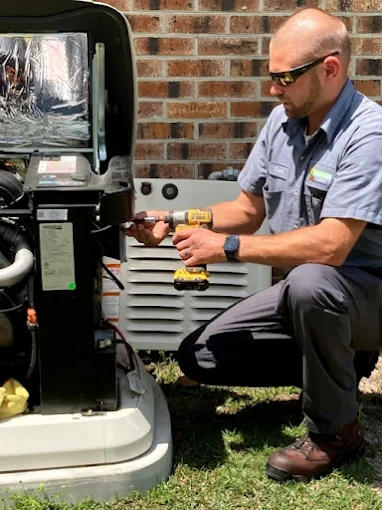
Not every generator project begins with buying a generator. For Robert, a longtime Carolina Cool customer, it began with the wiring: how to set up his home so the important circuits could run on generator power during an outage.
The Project
Robert and his family had already used Carolina Cool for air conditioning and plumbing repairs. Their next project was an electrical cutover, so that parts of the house could run on a generator during an emergency.
Instead of presenting one option, Carolina Cool’s team explained several ways to set up the cutover and worked within Robert’s budget to find the one that fit his needs.
What a Cutover Does
A cutover, also called a transfer switch, is the piece of equipment that lets a home switch between utility power and generator power safely. It disconnects the selected circuits from the utility line before connecting them to the generator. That matters for two reasons. It keeps generator power from flowing back out onto the utility lines, which can injure line workers repairing an outage. It also protects the generator and the home’s equipment when utility power comes back on.
Choosing Which Circuits to Back Up
Most homeowners do not need to power the whole house during an outage. The common choices are the refrigerator and freezer, a well pump if the home has one, the furnace blower or a heat pump, lighting in a few rooms, and outlets for phones and medical equipment. The electrician moves those circuits to the transfer switch or a dedicated subpanel. The number of circuits selected drives both the size of the generator needed and the cost of the wiring, which is why scoping the project to a budget starts with that list.
Portable or Standby
A manual cutover pairs with a portable generator that the homeowner starts and plugs in when the power fails. An automatic transfer switch pairs with a standby generator that starts on its own. The portable setup costs less to wire and is often where a homeowner begins; the standby setup runs whether or not anyone is home. Both need the same planning about which circuits to protect, and a manual cutover installed now can be upgraded later. A portable generator also needs a safe place to run outdoors, well away from windows and doors, because engine exhaust contains carbon monoxide.
Why This Matters on the Grand Strand
Coastal storms bring extended outages, and the humid season means a home without power also goes without air conditioning. A planned cutover lets a homeowner run cooling in one zone and keep food cold instead of waiting out a multi-day outage with nothing.
If You Are Planning for Backup Power
Carolina Cool presents the price before work begins, so a homeowner knows the cost of each option before choosing one. Whether you already own a generator or are still deciding on a backup power plan, the team can explain the wiring options and size the project to your needs. Carolina Cool installs and wires generators and handles related electrical work for homes across the Myrtle Beach area. Request service online or call to schedule a consultation.


